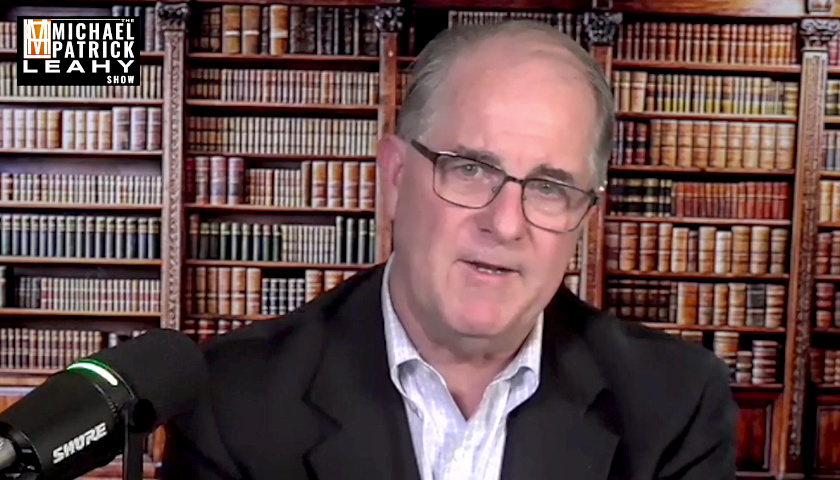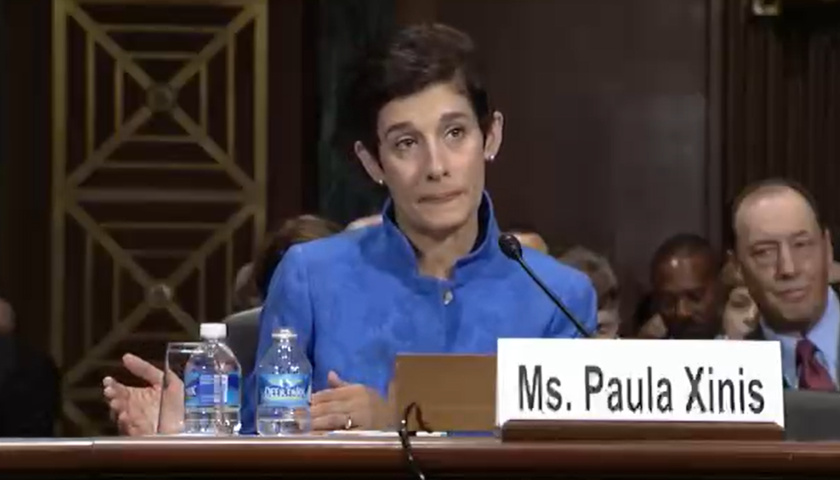
Tom Pappert, lead reporter at The Tennessee Star, argues that Obama-appointed U.S. District Court Judge Paula Xinis has created an entirely new and unprecedented legal standard in the case of Kilmar Abrego Garcia which fundamentally alters how long-standing deportation orders are interpreted.
On Friday, one day after ordering Abrego Garcia to be released from ICE custody, Xinis granted Abrego Garcia’s request prohibiting ICE from detaining him following his release from custody.
Pappert, who, along with The Star’s CEO and Editor-in-Chief Michael Patrick Leahy and Executive Editor Christina Botteri, won the prestigious 2025 Dao Prize for coverage of Abrego Garcia, said Xinis overturned years of unquestioned consensus by ruling that Abrego Garcia’s 2019 immigration decision was not a valid final removal order because it lacked the words “I order you deported.”
By introducing this new requirement retroactively, he said Xinis set a standard that could allow thousands of other illegal immigrants to challenge their own removal orders on technical linguistic grounds.
“Fundamentally, what she has done here is create a new legal hurdle where all the illegal immigrants who do not have those four precious words in their final deportation order, will now be able to go to a judge and have them say this is not a valid deportation order,” Pappert explained on Friday’s edition of The Michael Patrick Leahy Show.
He stressed that immigration judges have not been required to include that specific wording for more than a century, and the federal government had always treated Abrego Garcia’s 2019 decision as a legitimate, enforceable removal order.
“This puts the government in an impossible position. They closed the immigration case back in 2019 when the final deportation order that Xinis denies the existence of was signed and just in October of this year, another immigration judge said we are not reopening this case, it was adjudicated fully back in 2019,” Pappert explained.
“That means there is no opportunity for the DHS to reopen this case, to get the order modified to include those four words. Essentially, Kilmar Abrego Garcia, under the reading of the law created by Paula Xinis out of thin air, can not be deported. He cannot be detained. He doesn’t get asylum. He just gets to live in the United States for the rest of his days, thanks to this Obama-appointed judge,” he added.
Pappert also argued that Xinis built this new standard on misapplied legal precedent, pointing out that the cases she cited involved individuals who filed timely appeals, unlike Abrego Garcia, who never appealed within the statutory window.
Because of this, Pappert said the cases have no relevance, and Xinis’ reliance on them reflects a deliberate attempt to stretch or reinterpret case law to achieve her desired outcome.
Further, considering the judge’s embracement of several arguments advanced by the defense that had previously failed before immigration authorities; her skepticism toward DHS; willingness to entertain claims of “vindictive prosecution;” and her repeated decisions protecting Abrego Garcia from detention, Pappert and Leahy both agreed these actions reflect Xinis’ real goal of restricting the Trump administration’s deportation power.
“What Xinis is doing right now is she’s trying to, from the bench, usurp the legislative authority of Congress and rewrite a hundred years of immigration laws and dictate what the executive branch should do differently because she doesn’t like what they’re doing,” Leahy stressed.
Tune in now to The Michael Patrick Leahy Show – your AMERICA FIRST news talk!
– Watch LIVE here on X
– Watch LIVE on Roku
– Listen on Spotify
– Listen on WENO AM760 in Nashville
– Read more at @TheTNStarhttps://t.co/6tA8r1j7IW— Michael Patrick Leahy (@michaelpleahy) December 12, 2025
– – –
Kaitlin Housler is a reporter at The Tennessee Star and The Star News Network. Follow Kaitlin on X / Twitter.